


NCERC Secures Status as Industry Leader as Advancements in Biofuel Technology Include Multimillion Dollar Facility Expansion
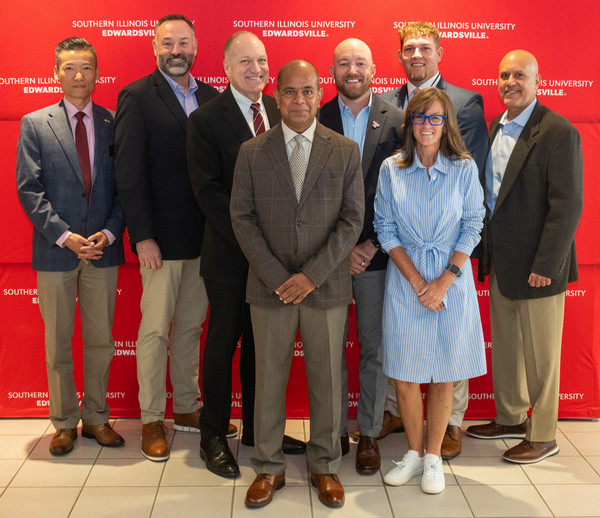
On Tuesday, October 13, the National Corn-to-Ethanol Research Center (NCERC) at Southern Illinois University Edwardsville hosted the annual NCERC Illinois Ethanol Research Advisory Board Meeting days after a major announcement of a combined $17 million granted from the state and Illinois Corn Growers Association. The significant contribution upholds NCERC’s status as a leading contributor to biofuel manufacturing and the bioeconomy. Chairman of the Illinois Ethanol Research Advisory Board and SIU System President Dan Mahony, PhD, welcomed the Board, partners, SIUE Chancellor James T. Minor, PhD, Provost Denise Cobb, PhD, Associate Provost for Research and Graduate Studies Dean Christopher Slaten, PhD, School of Business Dean Mario Hayek, PhD, School of Engineering Dean Liang Cheng, PhD, State Rep. Katie Stuart, IL Corn and stakeholders. Board members who attended virtually were German Bollero, PhD, UIUC Dean of the College of Agricultural, Consumer, and Environmental Science, Kristin Richards, Director of Illinois Department of Commerce and Economic Opportunity (DCEO), Kristina Boone, PhD, SIUC Dean of the College of Agricultural, Life, and Physical Sciences and Matt Frostic, President of the National Corn Growers Association. The presenters immediately addressed the business of next steps after the news of the historic investment in the leading fermentation Lab and pilot plant’s expansion.
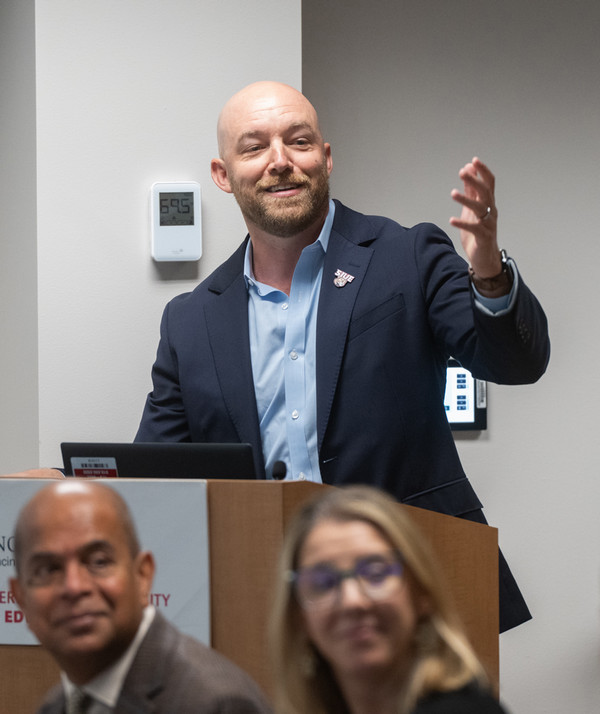 Dean Slaten opened the presentations by acknowledging NCERC’s new leadership. He thanked Director of Research Yanhong Zhang, PhD, who aptly held the role of interim director prior to the new arrival of Executive Director Praveen V. Vadlani, PhD, MBA. Slaten also recognized the newest team member, Associate Research Director Sol Martinez, PhD.
Slaten gave context to the significance of the state’s multimillion-dollar contribution.
“This has been a long time in the making. We've had dreams of this for a while. This will produce more job opportunities in the state of Illinois, more training opportunities,” said Slaten. “We have planned a workforce development center here, as well as expanded facilities where we can bring products past pilot plant work. This investment increases our opportunities for biomanufacturing, utilizing additional feedstocks, and advancing biofuels.”
Before NCERC expands physically, the team has already made strides in biotechnology. Vadlani presented an overview of NCERC’s bioprocessing and biomanufacturing capabilities through the lens of commercialization of ethanol and aviation biofuels, engineering and pioneering research in biobased chemicals and biopolymers while looking to the future with AI-powered data analytics and digital twins. According to Vadlani, NCERC’s expansion plan is as much a focus on the facility’s fermentation suite, and a variety of bioenergy products originated in feedstock, as providing a pipeline of industry expertise through research fellowships and workforce development.
 “Experiential learning is a key feature as we develop the workforce from classroom to fellowships to alumni in the workplace,” said Vadlani. “As for facility upgrades, laboratory equipment upgrades will support biomolecule research, pilot plant modernization, increase facility reliability, shorten project turnaround times, build capabilities and improve pilot-plant flexibility.”
Zhang outlined NCERC’s impact and the ability to address the critical workforce gap by combining biomanufacturing and project management training. She noted, “Although NCERC holds its status as a technical leader for the past 10 years in corn to ethanol, clients can take NCERC data to do trials that include other grain stocks like sorghum to ethanol, waste to ethanol, waste to green textile and more.”
“We see NCERC as the demand driver of the future and to unlock the ability to pass that farm to the next generation for generations to come,” said Justin Moore, IL Corn Growers New Uses Research and Biofuels Manager, who also mentioned the efforts of Rep. Stuart and U.S. Representative Nikki Budzinski. IL Corn contributed an additional $2 million to the state’s $15 million grant for the NCERC expansion.
Moore shared stories from The Radicle Corn Challenge sponsored by US Corn Farmers, where the value of area farmers is quite evident. The 2025 and 2026 winners presented bio-based polypropylene and personal-care ingredients derived from corn, as well as bio-based acrylics and next-gen sustainable chemicals.
 “Companies like these are exactly why NCERC needed to expand,” said Moore.
“For more than 20 years, NCERC has been a leader in biomanufacturing research and biorenewable research,” said Chancellor Minor. “Every ethanol plant in the U.S. is using at least one commercialized technology that was developed at NCERC. That is extraordinary.”
After a morning of industry leaders convening around the vision for biotechnology in areas of maritime fuel, SAF and bioplastics, Rep. Stuart summed up NCERC’s success.
“This is the model of innovation for the United States. Getting degrees is not the only part of higher ed. This is why we support our higher education institutions at the level we do in the state of Illinois--the story of what this $15 million state infusion is going to do.”
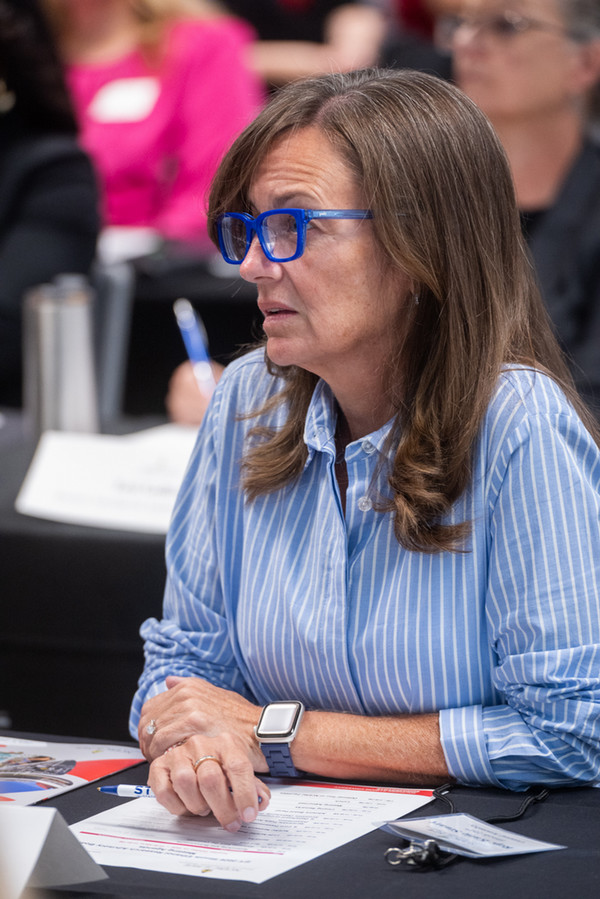
PHOTOS: School of Engineering Dean Liang Cheng, PhD, Jeremy Flynn, Illinois Department of Agriculture, Chairman of the Illinois Ethanol Research Advisory Board and SIU System President Dan Mahony, PhD, NCERC Director Praveen V. Vadlani, PhD, MBA, Associate Provost for Research and Graduate Studies Dean Christopher Slaten, PhD, Justin Moore, IL Corn Growers New Uses Research and Biofuels Manager, School of Business Dean Mario Hayek, PhD, and State Rep. Katie Stuart (112th District); Graduate Studies Dean Christopher Slaten, PhD, with NCERC Director Vadlani and Associate Dean for Research and Graduate Studies Elizabeth Cali, PhD, in the foreground; Rep. Stuart; Chancellor James T. Minor, PhD


