


Beyond Rental: SIUE's Efforts Towards Textbook Affordability
November 2, 2026, 11:44 AM
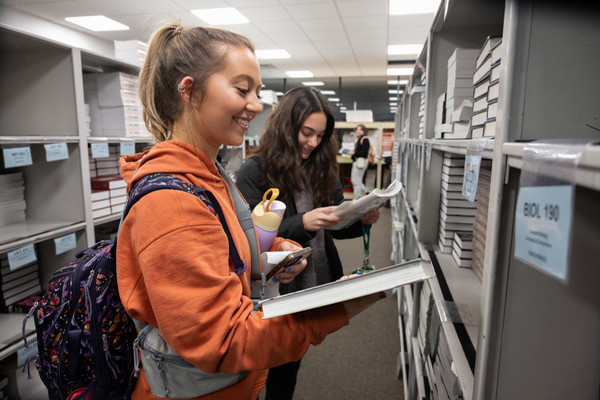
Show up for classes and your textbooks are covered—the deal has always felt simple for generations of Cougars at Southern Illinois University Edwardsville. But as course materials have progressed to be online and publishers have found new ways to charge for access, the provision takes more creativity and more collaboration than ever before.
Since 2021, SIUE has built a growing Open Educational Resources (OER) program alongside its decades-old textbook rental model, giving faculty the incentive and support to replace costly textbooks and digital access codes with free, high-quality alternatives. The effort, born out of a partnership between Academic Affairs and Student Affairs, has already resulted in significant savings for students and is drawing attention from other universities across Illinois and beyond.
"SIUE is quite a unique institution because unlike a lot of other universities, where the reality of increasing publishing costs have forced their hand to start thinking about alternative ways to provide cost savings to students," said Elza Ibroscheva, PhD, Associate Provost for Accreditation, Assessment and Academic Planning. "SIUE has long been committed to accessibility and to substantially reducing students’ costs through its textbook rental model."
Since its founding, SIUE has offered a textbook rental program funded through student fees, meaning students receive the books they need for their courses at no out of pocket cost, regardless of how many textbooks are required. As course materials have grown more digital and with added one-time usage codes, this rental model has run into new obstacles. Single-use digital access codes and electronic course materials, which come with their own recurring costs, added cost to the university that could not be covered at the level of the textbooks fees collected.
 "Maintaining solely a textbook rental system doesn't necessarily mean the institution is able to cover all the costs associated with digital, one-time code uses, electronic materials and instructional resources that come attached with those books," said Ibroscheva. "That exponentially increases costs not reflected in the reasonable fee we charge students, and those costs are difficult to project as new technologies and innovative tools become available in digital publishing."
That gap is what led SIUE to explore new strategies for curbing the growing cost of digital access codes while preserving the rental model on which students already rely. The result was SIUE's participation in a yearlong OER Institute, where staff, leadership and faculty worked through the challenges of building an OER model suited to the University, and the beginning of a formal faculty incentive program.
The program gives faculty members time and support to study, pilot and adopt OER materials—instructional resources that are free, platform-agnostic and available to anyone. Faculty can choose to adopt existing OER content or create their own, and an OER committee made up largely of librarians and faculty reviews proposals and helps guide the process.
"What's been most striking and most transformative has been the shift in culture in how people think about the factors of accessibility, affordability and innovation," said Ibroscheva.
Because OER materials are covered by Creative Commons licensing, they can also be edited, updated and shared far beyond SIUE's campus.
"Once published in a Creative Commons license, they could be available to anyone, anywhere around the world," said Ibroscheva. "That's a particularly proud moment for SIUE—to think about what higher education is really capable of doing, which is provide access to scholarly resources to people who might not necessarily have any other way of gaining that kind of knowledge."
The initiative has grown alongside a parallel effort with Student Affairs—an all-inclusive access agreement with Cengage that gives students in participating courses affordable access to digital textbooks and instructional tools across a range of disciplines.
Faculty can apply for similar incentive stipends to explore replacing costly individual textbooks with Cengage's all-inclusive materials, a program that has produced its own significant savings alongside the OER effort. With its renewal for 2026-27 academic year, faculty at all levels, including adjunct and non-tenure-track instructors, are eligible for stipends ranging from $500 for adopting OER to potentially a month's salary or more for developing and publishing new resources.
Faculty across campus have stepped up to pilot both models.
Mark Poepsel, PhD, professor of mass communications, won a grant from the Consortium of Academic and Research Libraries in Illinois to develop an OER textbook.
"We’re currently using 'The OER Guide to Media Writing' in all sections of our Writing for the Media course," Poepsel said. "The text is tailored to our class and the way we teach it, but the book, even just a few chapters, can be adopted to fit all kinds of media writing courses anywhere in the world."
Stan Solomon, associate professor at the School of Business, created OER instructional materials for his management courses—a discipline Ibroscheva said many assumed would be difficult to convert given its reliance on case studies and data sets. Faculty in the School of Nursing have also developed and adopted OER materials for their courses.
Joe Kohlburn, assistant professor for Open Educational Resources and Scholarly Communications at Lovejoy Library, has supported faculty through the process and helped secure grant funding.
For students, the payoff is straightforward—first-day access to course materials, no extra cost beyond the textbook rental fee already built into their cost of attending the university and easy integration with Blackboard.
Ibroscheva went on to highlight how SIUE is exploring a system-wide effort with SIU Press that could eventually make it the publishing home for OER materials created by SIU-affiliated faculty—a model that doesn't exist elsewhere.
"In the near future, the possibility of an entity like the university press being the one place—the hub—where open educational resources authored by SIU-affiliated faculty are published, maintained and distributed to the larger reading audience, would be a remarkable achievement," Ibroscheva said.
Faculty are encouraged to learn more about the program and apply for an incentive stipend.
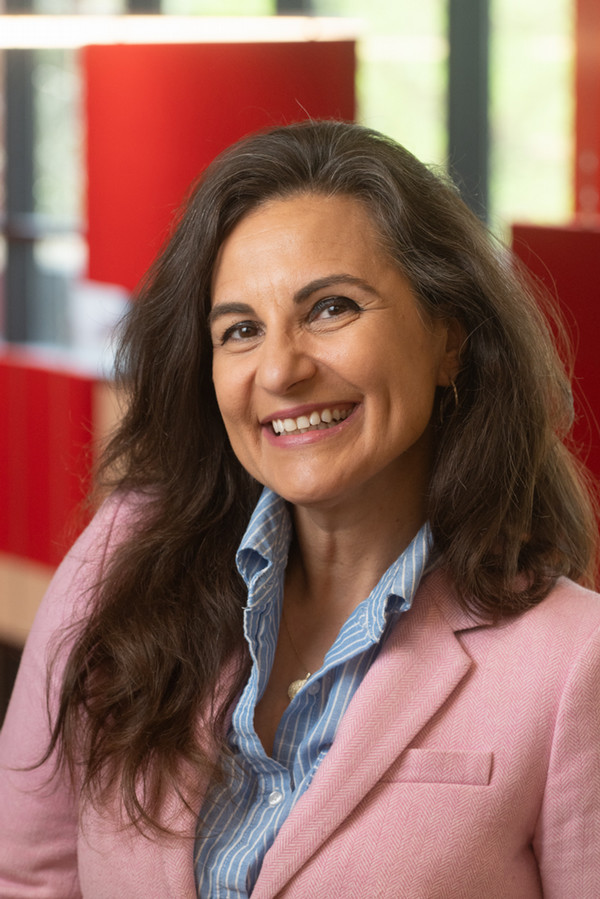
PHOTO: SIUE students browsing the course materials through the University’s textbook rental program; Elza Ibroscheva, PhD, Associate Provost for Accreditation, Assessment, and Academic Planning


