Sample Student Poetry Explication: Spencer Reece, "Florida Ghazals"
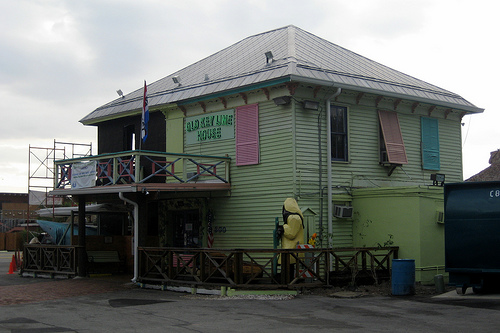
Figure 1. Old Key Lime House in Lantana, Florida
In a 2005 interview, when asked which of his many poems in The Clerk’s Tale won out as his favorite among the rest, Spencer Reece commented, “I can’t say there is [one]. I’ve always hoped to strive towards remembering a time or a place or a person accurately. That is all.” Truly, one needs only to be briefly acquainted with Reece’s poetry in order to confirm this statement. The candid imagery that “Florida Ghazals” calls to mind gives the reader an unusually lucid and jarring sense of the respective and elementally common perspectives of the poem’s unique characters. As so artfully crafted by Reece, these characters cast a bright light on his sensitive and sincere empathy for the prevalent plight of the lonely and downtrodden. In “Florida Ghazals,” he demonstrates this capacity by depicting an uncanny portrait of a small, coastal Florida town and several of its sundry inhabitants, prying deeply into those muffled aspects of their lives which are not so audible amidst the day-to-day cacophonies. Looking closely at the poem’s use of tone, figurative language, and symbolism, it soon becomes obvious why this poem creates in the reader such strong emotional affects. We find that the poem is, in essence, an ode to the lonely, a song for the silent, and ultimately, a tale of unrequited love.
It has to be admitted, as Reece consistently skirts through couplets and characters with discordant consonants occasionally clicking, one’s first blush impression upon a cursory reading might conjure to mind the familiar rantings and ravings of the Mad Hatter as made notorious in Lewis Carroll’s Alice in Wonderland (1865). However, after a more detailed, studied, and oftentimes heart-wrenching analysis of the literary devices employed, one begins to fully appreciate the poet’s effective transformation of sorrowful human frustration into insightful and enlightening meaning for the reader.
A ghazal, in the traditional sense, is a poetic form which employs the use of multiple rhyming couplets which usually follow the same meter. Each couplet is crafted to stand as an independent poem in itself, and they together provide a larger context which reveals the inherent structure of the form. In “Florida Ghazals,” however, Reece departs from this strict format. His couplets are written in free verse, and its instances of assonance and alliteration far outnumber its sparing use of rhyme. To be sure, the poem could not have retained its emotional power if it had not done so. One gets the sense that the speaker carefully paces himself with each word, taking patient and deliberate steps with each and every syllable. Reece’s diction and simple syntax allow the poem to read much like a narrative book, and a common thread seems to run throughout, beckoning the reader to carefully consider his every word. This untethered simplicity of style lays the foundation on which the somber theme of the poem finds its firm, level ground, and upon which is built the framework to support the meaning.
From the beginning, the tone of the speaker in “Florida Ghazals” exhibits an odd detachment from the scenes and actions portrayed. Nevertheless, it remains perceptible that, despite his soft-spoken manner, the speaker can readily identify with the episodes at hand. This calm, meditative tone gives readers the sense that the speaker has himself been through and overcome similar troubles, providing the reader with the reassuring comfort of his empathy. In return, the strength that his words give to readers is then reciprocated within the poem, forming the cornerstone of its power: “the lonely claim my voice and make it strong.” The narrator also takes part in much of the action of the poem. In section six, he describes his time spent “in an institution,” which we can most probably infer to mean a mental institution. Later in the poem, the speaker alludes to himself sitting at a typewriter, “attempting to record all those lost and unmarked.” It seems as if he is here commenting on his own composition, through which he attempts to provide a voice for those who have suffered similar experiences and who understandably cannot speak for themselves—the “silent.”
The image of a hurricane provides a recurring metaphor in “Florida Ghazals,” acting as the vehicle through which longing and desire, the tenors, are represented. In the third couplet of the second section, we observe a teenage boy who becomes overpowered by his “hurricanes of desire,” which he presumably extinguishes by masturbation. At this point, “hurricane” is used simply as a figurative simile to describe desire, but hereafter in the poem it is deployed as a metaphor to illustrate the destructive and debilitating effects of desire and longing on the larger scale of society. The phrase “All this beauty. Butterflies at the ankles. Birds, birds” brings to mind the image of a sunny Florida afternoon, but the volta of the couplet proceeds to turn matters around: “When hurricanes come with their bad names, they ruin this place like madness.” Here, the image of a pleasant day and the metaphor of the hurricane (as well as a real hurricane) are used to demonstrate how severely this particular brand of longing and desire affect one’s well-being. The speaker later states that “[t]he unmarked mass grave of the 1928 hurricane beckons me.” This example of personification seems to serve as a further metaphor for his purpose in writing the poem. The “unmarked mass grave” may represent the many who have been affected by this longing and who “beckon” him to write the poem in their name. Thus, the poem itself becomes Reece’s means of metaphorically carving in granite a meaningful epithet onto those unmarked graves.
At the start of the poem, when we encounter the alliterated phrase “the silence of the sea and the silence of the swamp seep into our muscles,” it becomes apparent that this “silence,” which is found to be the most repeated word in the poem, will serve an integral function. It is evident that “silence” stands as the central symbol of the poem, but we find that it lends itself to multiple uses, so that providing a precise definition may in some way restrict our interpretation. For instance, “silence” in the phrase, “the silence of the naked ladies builds,” appears to refer to the unnamed teenager’s mounting awareness of the absence of the object of his desire. Later, when his “hurricanes of desire are arrested” through what we must presume to be a self-induced sexual climax, the ensuing “silence” further seems to represent that, despite his efforts at alleviating this longing, it nevertheless remains. The speaker also relates the setting of a gymnasium, in which we find men who are “silent in their strength.” He goes on to inquire, “When does silence go from being an asset to a liability?” The question appears to be rhetorical. It seems that he is perplexed at where the line is drawn between his own silence and the silence of the men in the gym; for them, he implies, it is an advantage, while for him it remains a burden. In both of these portraits—the teenage boy in his “diorama of loneliness,” and the speaker among the many men in the gym who are “silent in their strength”—“silence” appears to represent the yearning which arises from these unmet needs: for the boy, this frustration arises from his inability to achieve control of emotion; likewise, the speaker’s frustration arises from his inability to achieve control of expression. For both, silence becomes a liability.
On the same note, one is reminded of the “phlegm of dependency” from the fifth couplet of section four which describes the pelican’s dependency on fish for survival—a dependency which Reece here demonstrates to pervade all of nature. Humans are no exception. When these dependencies are not met, the poem implies, a yearning arises which seems to be suffocated, but never eliminated, by this “silence.” We can also look to the ending couplet of the first section of the poem, in which the speaker refers to himself as a “pioneer of silence,” but then remarks that “the silencing of madness … is unresolved.” Could this be the reason why silence is used to veil this longing? Perhaps the silence hides what might be perceived as “madness,” another word which occurs regularly in the poem. The speaker relates, “When I come out at last from the dark I am committed.” Does he mean “committed” into an institution? Is it possible he is implying that when he finally voiced his dependency and longing—“came out from the dark”—that he was labeled crazy? This could explain the frequent mention of mental institutions, as well as the several references to homosexuality, which most often involves a “coming out.” This would, in effect, make the poem a message to the lonely, assuring them that they are not alone—that everyone and everything is dependent. It is now clear why providing an identification for exactly what “silence” might symbolize becomes problematic, now that we have seen its inherent flexibility within the poem. We might broadly conjecture with some confidence that the symbol of “silence” refers to that quality which characterizes loneliness—a certain “silent” apathy. Perhaps Reece could be stating through the poem as a whole that the lonely are not alone? And is it then possible that the poet is summoning them to come out from their “silence?” Reece presents silence both as a weakness and a strength.
While “Florida Ghazals” is a poem addressing certain universal, culture-crossing themes, it moreover sheds light on a particular problem which is characteristic of Western culture—the idea that it is not “okay” to feel lonely and downtrodden; that voicing your dependence and seeking a helping hand are signs of weakness. Indeed, Reece reveals a pervasive obstacle which has far too seldom come to the surface of public attention. He thus concludes the poem with the poignant words, “Down here, the lonely claim my voice and make it strong.” Let us hope that this statement, which exemplifies the strength summoned by a grass-roots sentiment, will not go unheard. For I have heard, and now claim my voice as added strength among the chorus.
Works Cited
Reece, Spencer. "Florida Ghazals." Blackbird: Online Journal. Vol. 8.1 (14 Oct. 2009): http://www.blackbird.vcu.edu/v4n2 2.
Russell, Jenni. Interview with Spencer Reece. MiPOesias Magazine 20.1 (14 Sep. 2009): www.mipoesias.com/2006Volume20Issue1/reeceinterview.html.