


CODES Celebrates Community Partners Who Turn Student Research into Action
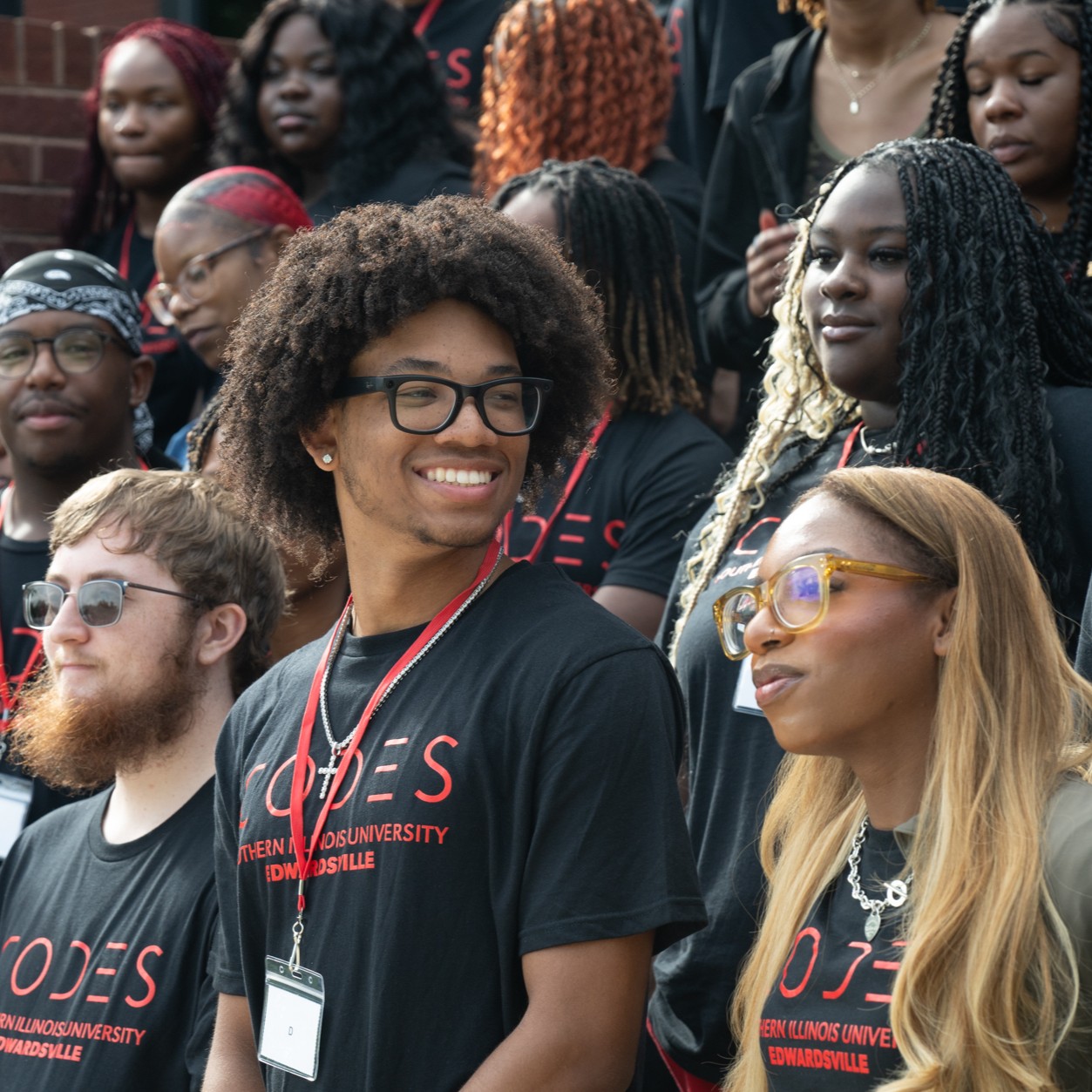 Southern Illinois University Edwardsville’s Community-Oriented Digital Engagement Scholars (CODES) program welcomed partner organizations to its inaugural Community Partner Lunch on Aug. 21 in Peck Hall.
The lunch thanked new and returning partners for investing their time, expertise and trust in CODE Scholars. Featuring boxed lunches and engagement opportunities, the gathering preceded presentations in which partners introduced a new cohort of students to potential community-based research projects.
“The CODES Program depends upon community partners who are willing to trust our CODE Scholars with significant projects,” said Jessica DeSpain, PhD, professor of English and director of the CODES Program. “They devote their time and resources to making sure students are successful and that what they create aligns with the organization’s needs and goals. This is our first partner lunch to show them how grateful we are for the commitment they have made and to give them the opportunity to tell us how we can strengthen the experience for them.”
CODES empowers SIUE students to initiate change in the communities around them. The selective program serves students who are Pell-eligible, among the first in their families to attend college or historically underrepresented in their majors. CODE Scholars receive full tuition waivers for four years while gaining experience through interdisciplinary research, digital projects and community engagement.
For Paul Lawal, a second-year pharmacy major, CODE Scholar and ambassador, that work has meant helping young people in Alton, Ill understand local government and how to make their voices heard.
“What I've learned from my research is that Edwardsville, which is 30 minutes from Alton, has a significantly higher average annual income,” said Lawal. “The education in Alton is also different. You have fewer people graduating, especially men, compared to Edwardsville.”
Lawal’s Child-Friendly Initiative research team is developing a club at Alton High School that would serve as a liaison between students and city officials. Students have a chance to identify concerns, suggest ways to improve their community and bring their ideas to Alton City Hall.
“We want to make sure that they are being mentored properly on how to make change within their community,” said Lawal.
Community partners help Lawal’s team understand local priorities, connect with residents and keep the project responsive to the young people it is intended to serve.
“We ask for new information from them all the time. My first semester they gave us a survey and that survey consisted of what the students want to see in Alton. We’re staying on track and constantly hitting those goals.”
That local knowledge is also central to SIUE’s partnership with AltonWorks, a social impact development company focused on revitalizing historic downtown Alton.
Caleb Lewis, community engagement manager for AltonWorks, said CODE Scholars will conduct a data study supporting a proposed food hub in Alton. The project will examine how the community might expand access to fresh produce, nutrition education and youth-centered cooking programs.
“We’re trying to figure out how to solve that problem for our community and bring more nutrition and more programming education,” said Lewis.
Other partnerships extend the CODES program’s reach across the St. Louis region.
Jean Konde, community outreach director for Vitendo 4 Africa, an immigrant-led nonprofit in St. Louis, said the organization connects immigrants and refugees with resources they may struggle to access because of language barriers, uncertainty or a lack of familiarity with available services. At the same time, Vitendo 4 Africa helps institutions connect with immigrant communities they want to serve.
“We came in to bridge the gap,” said Konde.
The organization plans to tailor student projects to identified community needs, including public health and access to education. Konde said students will receive support from mentors, staff and volunteers as they carry their projects from planning through completion.
At the Jackie Joyner-Kersee Food, Agriculture and Nutrition Innovation Center in East St. Louis, CODE Scholars have observed and participated in educational programs serving students from kindergarten through high school.
Zachary Stafford, urban STEAM and agriculture educator at the Donald Danforth Plant Science Center, said SIUE students have designed lessons about topics such as water filtration, environmental justice and plant science. Working directly with young people gives the scholars an opportunity to test those lessons while learning more about the community.
“It’s almost like an obligation for one generation to teach and nurture the skills of future generations,” said Stafford. “I want to be the workplace side that pours into them.”
The Community Partner Lunch recognized that commitment while opening a conversation about how CODES can continue strengthening its collaborations. As a new cohort prepared to meet prospective partners later that afternoon, the event highlighted the relationships that make the program’s work possible.
“We're very happy to be partners," Stafford said. "We want to work with students at any age to give them the tools and resources they need.”


