Internal Migration and Population Concentration in Developing Countries:
The intensity of migration and the direction of migrant currents have been of interest to social scientists since the laws of migration were first formulated by Ravenstein (1885; 1889) in the 1880s. One of the most important laws of migration gathered from these early studies was that migrants were attracted to great industrial centers, a proposition that would come to describe rural to urban migration in the developing countries in the mid twentieth century. Zipf (1946) built on Ravenstein's laws pertaining to distance and population size to formulate the gravity model of social interaction, where migration is expected to increase with an increase in the size of the population at the origin and destination and decline as the distance between the two locales increases. Zipf's model differs from the one proposed by Stouffer (1940) in which migration flows were not a direct result of distance but of intervening opportunities between the origin and destination. In this case, if a lack of suitable alternatives lie between the origin and possible destinations, migrants will proceed longer distances.
Rarely does the gravity model explain all variation in migration flows and other predictor variables must be sought. In the absence of warfare or environmental catastrophe, these variables are usually economic in nature. Lee (1966) contributed to migration theory by introducing the concepts of push and pull factors in the migration calculus. Origins and destinations had positive and negative features associated with them. If the negative features of the origin were more powerful, then migrants were pushed out, while at the destination, if the positive features were more powerful, then migrants were pulled in. Since the 1950s in developing countries, rural poverty has pushed migrants out while higher incomes and cultural amenities associated with the largest cities have lured migrants.
Cities that incorporate an inordinate percentage of the country's population, economic resources, and political control are referred to as primate (Jefferson, 1939). Although high rates of primacy are found in several European countries, it is primarily associated with developing countries. Limited economic resources and underdeveloped transportation linkages often initiated population growth of certain cities and the process then became self-sustaining. Several researchers, Mehta (1964), Wheaton and Shishido (1981), and El-Shakhs (1972) predicted that as a country progresses through economic development that the population concentration in the capital city would decline leading to a more balanced urban hierarchy. However, in many instances governments were unwilling to wait for this process to occur and initiated industrial/urban growth poles to lure population from the capital regions of their respective countries. Venezuela (Friedmann, 1969), Tanzania (Sawers, 1989), South Africa (Dewar, Todes, and Watson, 1986), Thailand (Sternstein, 1979), Egypt (Stewart, 1996), Mexico (Barkin, 1975), and Peru (Jameson, 1979), each had one or several of these growth poles, most of which failed because they could not attract the quantity or quality of migrants intended.
Evidence of a decrease in urban primacy did begin prior to 1980 in some developing countries, although to what extent government programs had on this decrease is uncertain. Vining (1986) found that five advanced developing countries, Greece, Ireland, Spain, Argentina, and Venezuela, experienced a significant decline in the rate of net migration to the core region in the 1970s, while further evidence from MacKellar and Vining (1995) revealed that negative net migration to the core was observed in Mexico, Cuba, Brazil, and Venezuela. Villa and Rodriquez (1996) found that 12 of the 14 largest primate cities in Latin America had experienced a decline in the level of primacy between 1970 and 1980.
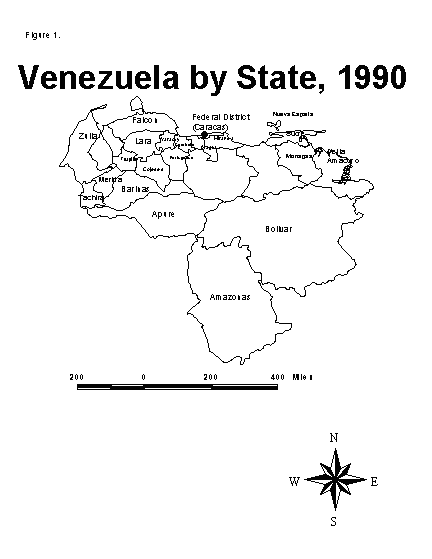
This study, mostly descriptive in nature, intends to examine the overall exchange of migrants between each of the 23 states of Venezuela (see figure 1) and the remainder of Venezuela in an effort to identify changes in migrational patterns for recent (1985-1990), intermediate (1980-1984), and long-term migration (pre-1980) as of the 1990 census. It is predicted that a rapidly industrializing country such as Venezuela will have experienced a spatial deconcentration of its population away from the core region during the 1980s similar to what occurred in most developed countries beginning in the 1950s and 1960s.
The paper is divided into six sections. Section two reviews related
literature on urbanization and economic development in Venezuela while
section three examines empirical studies of migration in Venezuela. The
data and methodology are discussed in section four. Net migration rates
for 1985 to 1990 are examined in section five to identify the important
migratory movements of the late 1980s. Migrant exchange ratios for each
state for recent, intermediate, and long-term migration are discussed in
section six, while section seven examines migrant exchange ratios between
the Federal District and the other states for the three time periods. Suggestions
for future research are presented in the conclusion.
The Historical Context of Urban Growth, Economic Development, and Migration in Venezuela:
Prior to 1920, Venezuela's economy focused on agriculture, specifically the production of coffee and cacao, and thus the urban hierarchy of the country was not well developed. As of 1920, only seven urban areas in the country exceeded 10,000 inhabitants. However, with the development of the petroleum industry after 1920, and the consequent building of railways and highways, 72 urban areas had attained a population exceeding 10,000 by 1961 (Chavez, 1981). High population growth rates and a lack of economic opportunities in rural areas after World War II resulted in a continual stream of migrants to urban areas in Venezuela (Chen, 1961). In particular, migrants were drawn to Caracas and the surrounding states which by 1970 , housed 30.4 percent of the Venezuelan population (Eastwood, 1983). Although Maracaibo, the major area of oil production, and Ciudad Guayana, the site of a massive steel industry complex, siphoned off some of the migrants to the Caracas region, their capital-intensive economic bases could not provide employment for most migrants, and thus, Caracas remained the real economic base of Venezuela given its capacity to absorb not only skilled but also unskilled migrants (Artle, 1971). Whereas in 1920, 11.7 percent of the Venezuelan population was urbanized (Gilbert, 1987), by 1990 85.0 percent of Venezuelans resided in urban areas (Venezuelan Census, 1990).
Venezuela was one the wealthiest countries in Latin America by 1961
as a result of its oil revenues (Moron, 1964). However, the world recession
in the early 1980s had a devastating effect on the Venezuelan economy.
By 1985, Venezuela had experienced an 8.0 percent decline in per capita
GDP (Enright, Frances, and Saavedra, 1996) that translated into a lower
level of living than in the early 1960s. During the 1980s, residing in
the capital region may have become a liability given the increase in such
basic items as meat, milk, and other daily necessities (Greenwood, 1984),
while congestion, pollution, and lack of adequate infrastructure (Myers,
1978) had already made Caracas less attractive by the late 1970s.
Studies of Migration in Venezuela:
Studies of internal migration in Venezuela over the second half of the twentieth century have been relatively scarce. This is surprising given the rapid population growth and urbanization that has occurred in the country since the 1940s. Chen (1961) examined migrational patterns between the states of Venezuela as of the late 1950s and noted that net migration gains occurred for the states of the capital region, Zulia in the northwest due to oil reserves and Bolivar due to the planning of a new industrial city. States with net migration losses included the rural states of the western highlands and the rural states of the delta region in the northeast. Other researchers examined migration within Venezuela using disaggregated data related to the characteristics of migrants. Levy and Wadycki (1971) examined migrational differences between young and middle-aged adults and found that young male migrants (15-24) were more attracted to states with higher educational levels and wages (mostly in the capital region) than their middle-aged counterparts. Female migrants showed little differences in their migration responses according to age most likely because of their role as passive migrants accompanying their husbands. Schultz (1982) examined male migrants by educational level and found that better educated migrants were willing to move further distances and were more responsive to wage levels and employment differences than their less educated counterparts.
The most applicable study to the present paper is Levy and Wadyki's (1972) study of life-time versus one-year migration in Venezuela as of 1961. The author's found that most of the variance in migrant behavior for both groups was accounted for by distance and wages/unemployment rates at both origin and destination. However, life-time and one-year migrants differed in two respects. Firstly, the educational level in the origin state was less significant for one-year migrants than for life-time migrants, probably due to the increased educational opportunities in Venezuela by 1960 than in previous decades. Secondly, one-year migrants were less attracted to states with large cities than their counterparts suggesting migration was diffusing down the urban hierarchy.
Brown (1991) examined both individual characteristics of migrants as
well as development factors related to the origin and destination on the
decision of individuals to outmigrate from a Venezuelan district. Most
of the variance in the dependent variable (66.1 percent) was a result of
the structure of the Venezuelan districts defined as economic and educational
characteristics of the aggregate population. At the individual level, females
were more likely to outmigrate than their male counterparts, migration
declined with age, while it increased with educational level. Brown and
Lawson (1989) examined polarization reversal, or deconcentration in the
capital region using 1971 census data. They examined eight urban districts
as well as the remainder of Venezuela (counted as one enumeration unit),
and found that even though the remainder of Venezuela had 12 times as many
outmigrants as inmigrants, the inmigrants were better educated than outmigrants.
The core regions of Maracaibo and Caracas were noted as gaining inmigrants
but redistributing better quality migrants to other areas. Unfortunately,
the study deals with life-time migrants instead of recent migrants and
is now three decades out of date.
Data, Limitations, and Methodology:
The 1990 Venezuelan Census provides migration data by state of previous residence disaggregated by length of residence in the current state as of 1990 for one year (1989-1990), 1-4 years (1985-1989), 5-9 years (1980-1984), and over 10 years (pre-1980). This analysis combines the 1 year and the 1-4 years into one category and is further referred to as recent migration.
The net migration rates per 1,000 persons are provided for the 1985 to 1990 period to give the reader a general overview of recent internal migrational patterns in Venezuela as of 1990. Net migration rates for intermediate (1980-1984) and long-term migration (pre-1980) are not explored in this paper. Intermediate migration closely approximates that of recent migrational patterns, while for long-term migration, it is impossible to discern when the migration actually occurred, and given that different states were likely to have had quite different migration histories, the denominator, or population at risk to migrate, would have to be set arbitrarily.
The methodology used in this analysis is borrowed from Chan's (1994)
study of internal migration in Malaysia which used a migrant exchange ratio
to measure whether a state is an overall loser of migrants or one that
has gained migrants for a particular time period. The migrant exchange
ratio for this study is computed by dividing the total number of inmigrants
from all states of Venezuela to that particular state by the total number
of outmigrants from that particular state to all other states. A figure
above 1.00 indicates that the state has gained from others while one below
1.00 indicates a net loss. Unlike migration rates, migrant exchange ratios,
have nothing to do with the population at risk to migrate. In addition
to examining overall migrant exchange ratios by state, it is also possible
to examine migrant exchange ratios for each state in Venezuela for each
of the time periods, but this analysis is concerned with the Federal District
(Caracas) and its exchanges with the other 22 states. Previous studies
have indicated a slowing of migration to the Federal District after 1980
(Vining and MacKellar, 1995; Villa and Rodriquez, 1996), and this paper
seeks to examine this phenomenon.
Rates of Net Migration for 1985-1990:
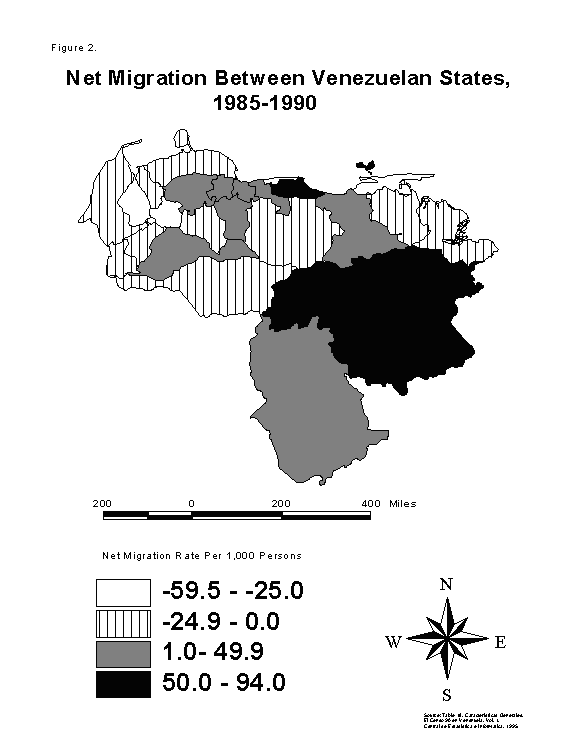
Table 1 provides the net migration rates per 1,000 persons by state for the 1985 to 1990 period while figure 2 displays net migration for 1985-1990. Eleven of the 23 Venezuelan states had negative net migration between 1985 and 1990. The Federal District (-58.8) experienced the greatest net loss followed by Sucre (-43.9), and Trujillo (-31.3). Net outmigration losses between 1985 and 1990 were found not only in the Federal District and Zulia which were adversely affected by the economic crisis of the early 1980s (Auty, 1990), but also in the peripheral states of the country which were still not well connected into the Venezuelan economy.
The states with the greatest net gain of migrants included Miranda (79.3);
Nueva Esparta (63.7); Bolivar (45.3); Carabobo (35.4); Aragua (34.8); and
Amazonas (32.0). Spatially, the states with the highest net migration rates
are located in two general areas. The first concentration consists of the
states surrounding the Federal District; Aragua, Miranda, and Carabobo.
It is likely that these states, and the secondary cities, associated with
them, such as Maracay and Los Teques, weathered the economic crisis of
the 1980s better than Caracas and thus benefitted from the outflow of migrants
from the Federal District as well as an inflow of migrants from other Venezuelan
states that would have been deterred from the Federal District. In addition,
the congestion, crime, and environmental disamenities of a large city such
as Caracas, probably deterred some potential migrants as well as redistributing
some migrants from the Federal District to the surrounding states. The
second concentration is found in the southeastern states of Bolivar and
Amazonas. Bolivar had an intense industrialization program that continues
to attract migrants, whereas Amazonas provided a resource frontier and
an alternative to migrants from the western highlands.
Migrant Exchange Ratios:
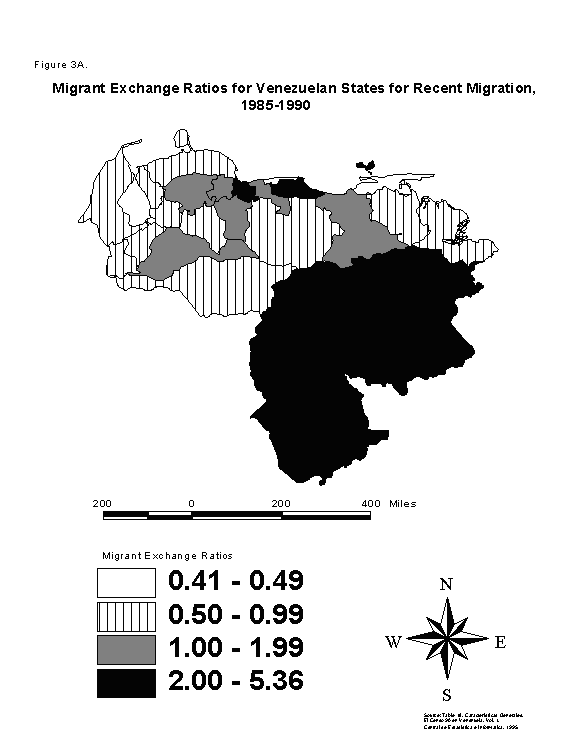
Twelve states, the Federal District, Apure, Falcon, Guarico, Merida, Monagas, Portuguesa, Sucre, Tachira, Trujillo, Zulia, and Delta Amacuro, had migrant exchange ratios below 1.00 for 1985-1990 indicating a net loss of migrants (Table 2, Figure 3A). These states also experienced negative migration rates for recent migration, and except for Zulia and the Federal District, are located in peripheral areas of the country that are not well connected into the urban and economic structure of Venezuela. Sucre, 0.41 and the Federal District, 0.45 had the lowest ratios. Similar migration exchange ratios do not, however, mean a similar number of in and outmigrant exchanges. The Federal District had a net migration exchange from all states of -133,185 while Sucre had one of -31,754. The states with the highest migrant exchange ratios for the 1985 to 1990 period included Amazonas (2.14), Nueva Esparta (1.87), Cojedes (1.70), Aragua (1.90), Miranda (5.26), Bolivar (2.48), and Carabobo (2.17). Other states with a positive migrant exchange ratio between 1985 and 1990 included Anzoategui (1.07), Barinas (1.10), Lara (1.09), and Yaracuy (1.05). The spatial distribution of states with positive migrant exchange ratios is most likely associated with states that have large secondary cities. These would include the resource frontier cities of Ciudad Guayana and Ciudad Bolivar in Bolivar State; as well as the cities spanning from Barquisemeto (Lara State) in the Northwest to Barcelona (Anzoategui State) in the Northeast.
Between 1980 and 1984, 11states registered migration exchange ratios below 1.00. Given that the migrant exchange ratios are similar between 1980-1984 and 1985-1990 and the working assumption of this paper is that the economic recession of the early 1980s reinforced migratory patterns that might have begun prior to 1980, this paper will focus on the latter period (1985-1990).
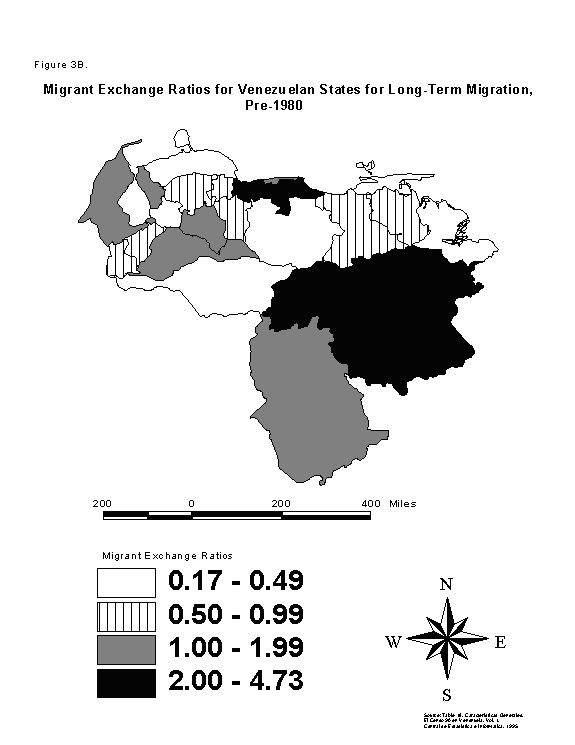
For pre-1980 migration, 14 states had migration exchange ratios below 1.00(Figure 3B). Six of these states had migrant exchange ratios that indicated a substantial net loss (defined as a migrant exchange ratio below 0.50) of migrants in residence exceeding ten years and included, Apure (0.36); Sucre (0.17); Trujillo (0.20); Guarico (0.46); Falcon (0.21); and Delta Amacuro (0.48). Spatially, all of these states, excluding Guarico, are on the periphery of Venezuela and thus do not act as an intervening opportunity for migrants moving within Venezuela. Nine states had migrant exchange ratios exceeding 1.00 for pre-1980 migration. Spatially, the most successful retainers of inmigrants are states from the capital region, Aragua (3.60); Carabobo (4.06); and Miranda (4.73); as well as the industrial growth pole state of Bolivar in the southeast (3.68). States with intermediate migrant exchange ratios included the Federal District (1.43), Barinas (1.70), Portuguesa (1.86), Zulia (1.79), and Amazonas (1.99).
A comparison of migrant exchange ratios for each state for recent and long-term migration determines whether a state is a state of repulsion or a state of attraction and whether this has changed and to what degree over the study period (Figure 4). States of repulsion for both study periods include Apure, Falcon, Guarico, Merida, Monagas, Sucre, and Delta Amacuro. However, each of these states improved their migrant exchange ratios when these ratios are compared over the two time periods, indicating that even though these states continue to register negative net migration, they were better off in 1990 in terms of retaining or attracting migrants than in 1980. For instance, Sucre had a migrant exchange ratio of 0.17 for migration exceeding ten years and a ratio of 0.41 in the 1985-1990 period. Although, Sucre lost over twice as many migrants in the latter period as gained, before 1980, the state was losing almost six times as many migrants as it was gaining. It is possible that in the western highlands and the northeastern states that lower fertility rates during the 1970s and 1980s (Lupi, 1991) as well as large migrations of young adults during mid-century (Chen, 1961) resulted in lower population pressure on the land and thus less outmigration. Five states, Aragua, Bolivar, Carabobo, Amazonas, and Miranda were states of attraction for each of the time periods. Three of these states, Aragua, Carabobo, and Miranda, are clustered in the capital region, while Bolivar was the site of an intense industrialization plan which not only attracted but retained migrants. Amazonas, although not part of the industrialization plan of its neighbor Bolivar, is a resource frontier region which provided an alternative to high population densities in the western highlands.
Eight states (the Federal District, Anzoategui, Cojedes, Lara, Nueva Esparta, Portuguesa, Yaracuy, and Zulia) were zones of attraction in at least one time period, while being a zone of repulsion in another time period. Anzoategui, Cojedes, Lara, Nueva Esparta, and Yaracuy switched from states of repulsion to states of attraction over the two time periods. A combination of factors most likely accounts for this reversal of migrant flows for recent versus long-term migration. First, secondary cities such as Barquisemeto (Lara) and Barcelona (Anzoategui) became more important in Venezuela's urban hierarchy after the 1970s. Secondly, each of these states is contiguous to one of the high inmigrant states of the capital region or Bolivar State and may provide intervening opportunities for migrants from the peripheral states of Venezuela. Thirdly, these states may have been the recipients of return migrants from the Federal District and Zulia during the economic crisis of the 1980s.
The Federal District was a zone of attraction (1.43) prior to 1980,
but became a zone of repulsion during the 1985-1990 (0.45) time period.
Likewise, Zulia and Portuguesa shifted from states of attraction for long-term
migration to states of repulsion for recent migration, and was most likely
a result of the decline of oil production. Much of the migrant flow in
Venezuela prior to the 1980s was directed towards Caracas and Maracaibo
(Zulia), where many of these migrants would have gained a foothold in the
urban economy and probably were more successful in surviving during the
economic downturn of the 1980s. Undoubtedly, the attrition rate for migrants
in residence more than ten years would have eliminated a percentage of
the initial migrant stock. Some of the migrants likely returned to the
origin early in the migration process given that they would have had less
of a stake in the destination state and less support to help them through
difficult times, as well as being less likely to have severed their connections
to the origin state. This paper now turns to a short examination of migrant
exchanges between the Federal District and the other states of Venezuela
for recent and long-term migration.
Migrant Exchange Ratios for the Federal District:
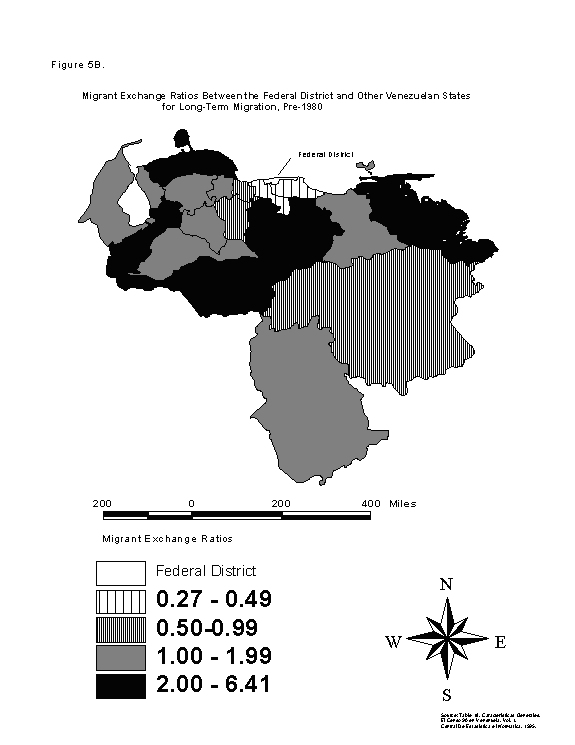
The final component of this analysis focuses on the migrant exchange ratios for the Federal District for recent (1985-1990) and long-term (pre-1980) migration (Table 3). By the 1980s, many Latin American cities were experiencing a deconcentration of their populations away from the largest city or cities due to planned deconcentration policies or the disamenities that became associated with these large cities. In Venezuela, these two phenomena probably interacted together (Myers, 1978). Several attempts by the government to move industry and population away from Caracas and into cities such as Maracay (Aragua), Valencia (Carabobo) and Ciudad Guayana (Bolivar) were implemented, although the success of these programs is yet to be determined (Reif, 1987). Figures 5A and 5B display migrant exchange ratios for both time periods. Recent exchanges reveal that the Federal District lost heavily (defined as ratios of 0.09 to 0.49) to the surrounding states (Miranda, Aragua, and Carabobo). This substantial loss was also evident in several of the western highland states (Yaracuy, Lara, and Barinas) as well as Zulia. Only four states contributed more migrants to the Federal District than vice versa and included Delta Amacuro, Sucre, Apure, and Trujillo, all of which have low per capita incomes, are still highly rural, and are located in peripheral areas of the country.
An examination of pre-1980 migrant exchanges with the Federal District
reveals a different pattern. Only five states received more migrants from
the Federal District than vice versa. Three of these states were in the
capital region (Miranda, Aragua, and Carabobo) and likely the deconcentration
of population to surrounding states was already occurring prior to 1980
(Brown and Kodras, 1987). Amazonas and Bolivar, located in southeastern
Venezuela, are considered frontier regions and had also gained migrants
from the Federal District. Eight states had migrant exchange ratios highly
favorable to the Federal District (defined as 2.00 to 6.41), and display
three spatial concentrations; the west, central, and the northeast. These
states lagged behind other states in terms of urbanization levels, economic
development and per capita income. An examination of these two maps highlights
the recent (1985-1990) exodus of migrants from the Federal District, and
also illustrates that even though the Federal District attracted migrants
from several peripheral states, these ratios were well below the ratios
of pre-1980 migrants. Trujillo was the greatest loser to the Federal District
in both time periods, but the loss was over four times as great prior to
1980 (6.41) than for 1985-90 (1.48). Although the Federal District lost
migrants to Miranda (0.36) and Aragua (0.27) for long-term migration, these
losses were even more severe for recent migration (0.09 and 0.19, respectively).
Conclusion:
Evidence from recent migration in Venezuela suggests that there is deconcentration in the Federal District but that the states surrounding this locale remained popular migrant destinations while successfully retaining potential outmigrants. These results are supported by other researchers on migration to Caracas and other large cities in Latin America where the capital regions actually expelled migrants (Villa and Rodriquez, 1996; Rowland and Gordon, 1996). Many of these migrants went to surrounding states, whereas some migrants returned to their origins in smaller states. The slowdown of the economy in Venezuela as well as other Latin American countries in the 1980s made living in a large city a liability. Transportation and communication systems were undoubtedly better in 1990 than in the pre-1980 period and may have contributed to the deconcentration process. In addition, migrants from more rural states who came prior to the 1980s would have acquired skills and possibly further education that would put them at an advantage upon returning to the area of origin, as Goldstein (1993) found in his study of recent migration (1980s) in Thailand and China.
Overall, states improved their migrant exchange ratios over the time period suggesting that either push or pull factors, or a combination of both, had been modified. Venezuela has decreased its fertility level over the past several decades, and thus less of a push for outmigration from rural areas would be likely. The economic crisis of the 1980s likely dampened migration and diminished the pull factor associated with the more prosperous states. The anomaly for migrant exchange ratios is the Federal District that appears to have become a redistributor of migrants to the adjacent states as well as to the western highlands while continuing to attract migrants from northeastern states. A major question that arises is how much of the migration to the western highlands from the Federal District between 1985 and 1990 was a result of return migration to area of origin? This was probably not an insignificant amount of the exchange between the western highlands and the Federal District.
An analysis of migrational patterns by duration of residence using the
2000 census data will be needed to determine how the Venezuelan populace
has redistributed itself during the 1990s. In addition, more attention
needs to be focused on migrational movements between urban areas than between
states given the high urbanization rate in Venezuela. Disaggregation of
migration flows by gender, age, educational level, occupational status,
and length of residence would further contribute to an understanding of
late twentieth century migration in Venezuela.
Bibliography:
Artle, Roland. 1971. "Urbanization and Economic Growth in Venezuela."
Papers
of the Regional Science Association. Vol. 27. Pp. 63-93.
Auty, R.M. 1990. Resource-Based Industrialization: Sowing the Oil
in Eight Developing Countries. Clarendon Press: Oxford.
Barkin, David. 1975. "Regional Development and Interregional Equity:
A Mexican Case Study". In Latin American Urban Research. Edited by Wayne
A. Cornelius and Felicity M. Trueblood. Sage Publications: Beverly Hills.
Pp. 277-300.
Brown, Lawrence A. 1991. Chapter 4. "Individual Migration and Place
Characteristics Related to Development in Venezuela." In Place, Migration
and Development in the Third World: An Alternative View. Routledge:
New York. Pp. 79-105.
Brown, Lawrence A. and Victoria A. Lawson. 1989. "Polarization Reversal, Migration Related Shifts in Human Resource Profiles, and Spatial Growth Policies: A Venezuelan Study." International Regional
Science Review. Vol. 12, No. 2. Pp. 165-188.
Brown, Lawrence A. and Janet E. Kodras. 1987. "Migration, Human Resource
Transfers, and Development Contexts: A Logit Analysis of Venezuelan Data".
Geographical
Analysis. Vol. 19, No. 3. Pp. 243-263.
Chan, Kok Eng. 1994. "Internal Migration in a Rapidly Developing Country:
The Case of Peninsular Malasia." Malaysian Journal of Tropical Geography.
25(2), Pp. 69-77.
Chavez, Luis Fernando. 1981 . "Crecimiento Historico y Desarrollo de
Sistemas de Asentamiento en Venezuela." Revista Geografica de Venezuelana.
Pp. 23-42.
Chen, Chi-Ye. 1968. Movimientos Migratorios en Venezuela. Instituto
de Investingaciones Economias de la Universidad de Andres Bello: Caracas.
Dewar, David; Alison Todes; and Vanessa Watson. 1986. "Industrial Decentralization
Policy in South Africa: Rhetoric and Practice." Urban Studies. 23.
Pp. 363-376.
Eastwood, D.A. 1983. "Venezuela: The 1980 Census Shows Continued Rapid
Population Growth."
Geography. Vol. 68. Pp. 345-347.
El-Shakhs, Salah. 1972. "Development, Primacy, and Systems of Cities."
The
Journal of Developing Areas." Pp. 11-36.
Enright, Michael J.; Antonio Frances; and Edith Scott Saavedra. 1996.
"The Structure and Performance of the Venezuelan Economy." Chapter 2 in
Venezuela:
The Challenge of Competitiveness. St. Martin's Press: New York. Pp.
13-43.
Friedmann, John. 1969. "The Guayana Program in a Regional Perspective."
Chapter 7 in Planning for Urban Growth and Regional Development: The
Experience of the Guayana Program of Venezuela
Ed. Lloyd Rodwin
and Associates. The MIT Press: Cambridge, Massachusetts. Pp. 147-159.
Gilbert, Alan. 1987. "Urban Growth, Employment and Housing". Chapter
7 in Latin AmericanDevelopment: Geographical Perspectives. Edited
by David Preston. Longman Scientific and Technical: Esses, England. Pp.
169-198.
Goldstein, Sidney. 1993. "The Impact of Temporary Migration on Urban
Places: Thailand and China as Case Studies." In Third World Cities:
Problems, Policies, and Prospects. Edited by John D. Kasarda and Allan
M. Parnell. Pp. 199-119. Sage Publications: Newbury Park.
Greenwood, Jonathan. 1984. "Riches and Debt in Venezuela". The Geographical
Magazine. Pp. 463-469.
Jameson, Kenneth P. 1979. "Designed to Fail: Twenty-Five Years of Industrial
Decentralization Policy in Peru." The Journal of Developing Areas. 14.
Pp. 55-70.
Jefferson, Mark. 1939. "The Law of the Primate City." The Geographical
Review. V. 29. Pp. 226-232.
Lee, Everett S. 1966. "A Theory of Migration." Demography. 3:1.
Pp. 47-57.
Levy, Mildred and Walter J. Wadycki. 1972. "Life-Time Versus One-Year
Migration in Venezuela."
Journal of Regional Science. Vol. 12. No.
3. Pp. 407-415.
Levy, Mildred and Walter J. Wadycki. 1971. "A Comparison of Young and
Middle-Aged Migration in Venezuela." Annals of Regional Science.
Vol. 6 Pp. 73-85.
Lupi, Jorge Zambrano. 1991. "La Poblacion de Venezuela en Visperas Del
XII Censo General de Poblacion y Vivienda". Revista Geografica de Venezuelana.
Vol. 32. Pp. 11-29.
MacKellar, F. Landis and Daniel R. Vining Jr. 1995. "Population Concentration
in Less Developed Countries: New Evidence." Papers in Regional Science.
74(3). Pp. 259-293.
Mehta, Surinder K. 1964. "Some Demographic and Economic Correlates of
Primate Cities: A Case For Reevaluation." Demography. 1. Pp. 136-147.
Moron, Guillermo. 1964. "The Contemporary Economic Scene in Venezuela."
Chapter 8 in A History of Venezuela. George Allen & Unwin Ltd.: London.
Pp. 223-251.
Myers, David J. 1978. "Caracas: The Politics of Intensifying Primacy."
Chapter 8 in Latin American Urban Research. Edited by Wayne A. Cornelius
and Robert V. Kemper. Pp. 227-258. Sage Publications: New York.
Ravenstein, E.G. 1885. "The Laws of Migration." Journal of the Statistical
Society. Pp. 167-227.
Ravenstein, E.G. 1889. "The Laws of Migration." Journal of the Statistical
Society. Pp. 241-301.
Reif, Benjamin. 1987. "Industrial Deconcentration Policy: Venezuela."
In The Economics of Urbanization and Urban Policies in Developing Countries.
Edited by George S. Tolley and Vinod Thomas. The World Bank: Washington,
D.C. Pp. 106-119.
Rowland, Allison and Peter Gordon. 1996. 'Mexico City: No Longer A Leviathan?"
In The Mega-City in Latin America. Edited by Alan Gilbert.
United Nations University Press: New York. Pp. 173-202.
Sawers, Larry. 1989. "Urban Primacy in Tanzania." History of Political Economy. Pp. 841-859.
Schultz, T. Paul. 1982. "Lifetime Migration within Educational Strata
in Venezuela: Estimates of a Logistic Model." Economic Development and
Cultural Change. Pp. 559-593.
Sternstein, Larry. 1979. "Thailand: Migration and Regional Development:
The Khon Kaen Development Centre." In Migration and Development in Southeast
Asia: A Demographic Perspective. Edited by Robin J. Pryor. Oxford University
Press. Pp. 59-68.
Stewart, Dona J. 1996. "Cities in the Desert: The Egyptian New-Town
Program." Annals of theAssociation of American Geographers. Vol
86(3). Pp. 459-480.
Stouffer, Samuel. 1940. "Intervening Opportunities: A Theory Relating
Mobility and Distance."
American Sociological Review. Vol. 5. No.
6. Pp. 845-867.
Venezuela. Central de Estadistica e Informatica. 1995. Caracteristicas
Generales. El Censo 90 enVenezuela. Vols. 1-23. Caracas.
Villa, Miguel and Jorge Rodriquez. 1996. "Demographic Trends in Latin
America's Metropolises, 1950-1990." In The Mega-City in Latin America.
Edited by Alan Gilbert. The United Nations University Press: New York.
Pp. 25-52.
Vining, Daniel R. 1986. "Population Redistribution Towards Core Areas
of Less Developed Countries." International Regional Science Review.
Vol. 10, No. 1 Pp. 1-45.
Wheaton, William C. and Hisanobu Shishido. 1981. "Urban Concentration,
Agglomeration Economies, and the Level of Economic Development." Economic
Development and Cultural Change. Pp. 17-30.
Zipf, George Kingsley. 1946. "The P1P2/D Hypothesis: On the Intercity
Movement of Persons."
American
Sociological Review. Pp.677-686.


| TABLE 1. NUMBER OF IN, OUT, AND NET MIGRANTS PER | |
| 1,000 POPULATION FOR THE STATES OF VENEZUELA |
| BETWEEN 1985 AND 1990: |
| IN | OUT | NET | ||
| Federal District | 48.5 | 107.3 | -58.8 | |
| Anzoategui | 49.7 | 46.2 | 3.5 | |
| Apure | 46 | 62.9 | -16.9 | |
| Aragua | 73.3 | 38.5 | 34.8 | |
| Barinas | 62.7 | 57.2 | 5.5 | |
| Bolivar | 75.8 | 30.5 | 45.3 | |
| Carabobo | 65.5 | 30.1 | 35.4 | |
| Cojedes | 64 | 37.6 | 26.4 | |
| Falcon | 33 | 48.8 | -15.8 | |
| Guarico | 41.2 | 61.5 | -20.3 | |
| Lara | 36.1 | 33.2 | 2.9 | |
| Merida | 55.3 | 58.9 | -3.6 | |
| Miranda | 97.5 | 18.2 | 79.3 | |
| Monagas | 50.4 | 70.3 | -19.9 | |
| Nueva Esparta | 96.9 | 33.2 | 63.7 | |
| Portuguesa | 37 | 40.6 | -3.6 | |
| Sucre | 31.2 | 75.1 | -43.9 | |
| Tachira | 59 | 59.7 | -0.7 | |
| Trujillo | 32.9 | 64.2 | -31.3 | |
| Yaracuy | 45.2 | 43 | 2.2 | |
| Zulia | 26.2 | 31.4 | -5.2 | |
| Amazonas | 60 | 28 | 32 | |
| Delta Amacuro | 51.4 | 54.7 | -3.3 | |
| Source: Table 18. Caracteristicas Generales. El Censo 90 en Venezuela. |
| Vol. 1. Central de Estadistica e Informatica. 1995. |
| TABLE 2. MIGRANT EXCHANGE RATIOS FOR SHORT, INTERMEDIATE, |
| AND LONG-TERM MIGRATION IN VENEZUELA AS OF 1990: |
| Short | Intermediate | Long | |||
| (1985-1990) | (1980-1984) | (Pre-1980) | |||
| Federal District | 0.45 | 0.44 | 1.43 | ||
| Anzoategui | 1.07 | 1.20 | 0.99 | ||
| Apure | 0.73 | 0.52 | 0.36 | ||
| Aragua | 1.90 | 2.62 | 3.60 | ||
| Barinas | 1.10 | 1.10 | 1.70 | ||
| Bolivar | 2.48 | 2.45 | 3.68 | ||
| Carabobo | 2.17 | 3.22 | 4.06 | ||
| Cojedes | 1.70 | 1.79 | 0.90 | ||
| Falcon | 0.68 | 0.45 | 0.21 | ||
| Guarico | 0.67 | 0.63 | 0.46 | ||
| Lara | 1.09 | 1.41 | 0.92 | ||
| Merida | 0.94 | 0.89 | 0.54 | ||
| Miranda | 5.36 | 6.06 | 4.73 | ||
| Monagas | 0.72 | 0.61 | 0.51 | ||
| Nueva Esparta | 2.91 | 1.87 | 0.83 | ||
| Portuguesa | 0.91 | 0.92 | 1.86 | ||
| Sucre | 0.41 | 0.29 | 0.17 | ||
| Tachira | 0.99 | 0.81 | 0.60 | ||
| Trujillo | 0.51 | 0.39 | 0.20 | ||
| Yaracuy | 1.05 | 1.10 | 0.61 | ||
| Zulia | 0.83 | 1.12 | 1.79 | ||
| Amazonas | 2.14 | 1.64 | 1.99 | ||
| Delta Amacuro | 0.94 | 0.80 | 0.48 | ||
| Source: Table 18. Caracteristicas Generales. El Censo 90 en Venezuela. |
| Vol. 1. Central de Estadistica e Informatica. 1995. |
| TABLE 3. MIGRANT EXCHANGE RATIOS BETWEEN THE FEDERAL |
| DISTRICT AND OTHER STATES OF VENEZUELA FOR RECENT, | |
| INTERMEDIATE, AND LONG-TERM MIGRATION AS OF 1990: |
| Recent | Intermediate | Long | |||
| (1985-1990) | (1980-1984) | (Pre-1980) | |||
| Anzoategui | 0.63 | 0.57 | 1.48 | ||
| Apure | 1.25 | 1.78 | 4.50 | ||
| Aragua | 0.19 | 0.10 | 0.27 | ||
| Barinas | 0.82 | 0.81 | 1.44 | ||
| Bolivar | 0.32 | 0.38 | 0.57 | ||
| Carabobo | 0.23 | 0.11 | 0.27 | ||
| Cojedes | 0.35 | 0.21 | 0.98 | ||
| Falcon | 0.86 | 0.95 | 3.38 | ||
| Guarico | 0.98 | 0.99 | 3.15 | ||
| Lara | 0.46 | 0.32 | 1.25 | ||
| Merida | 0.87 | 1.21 | 3.75 | ||
| Miranda | 0.09 | 0.07 | 0.36 | ||
| Monagas | 0.97 | 0.86 | 2.75 | ||
| Nueva Esparta | 0.20 | 0.29 | 1.00 | ||
| Portuguesa | 0.83 | 0.78 | 1.11 | ||
| Sucre | 1.18 | 1.40 | 4.96 | ||
| Tachira | 0.94 | 1.24 | 4.29 | ||
| Trujillo | 1.48 | 1.77 | 6.41 | ||
| Yaracuy | 0.60 | 0.41 | 1.90 | ||
| Zulia | 1.24 | 1.01 | 1.98 | ||
| Amazonas | 0.42 | 0.56 | 1.36 | ||
| Delta Amacuro | 1.11 | 1.59 | 3.87 | ||
| Source: Table 18. Caracteristicas Generales. El Censo 90 en Venezuela. |
| Vol. 1. Central de Estadistica e Informatica. 1995. |