ENG480.001
Major Authors: Crossing Boundaries
Mise-en-Abyme in Boccaccio, Chaucer, Borges, Auster
Prof. Eileen Joy
Spring 2012
Mondays 6:00 - 8:50 pm (Peck Hall 3404)
Achilles: That's quite a bit to swallow. I never imagined there could be a world
above mine before--and now you're hinting that there could even be one above
that. It's like walking up a familiar staircase, and just keep on going further
up after you've reached the top--or what you'd always taken to be on the top!
Crab: Or waking up from what you took to be real life, and finding out it too
was just a dream. That could happen over and over again, no telling when it
would stop.
--from Douglas R. Hoftstadter, Godel, Escher, Bach
listen: there’s a hell
of a good universe next door; let’s go
--e.e. cummings, “pity this busy monster, manunkind”
COURSE DESCRIPTION
In this course, we will explore the literary device of mise-en-abyme, or "a story within a story" (also known as a "nested" and "hypodiegetic" narrative, and in the words of Jorge Luis Borges, a story with "forking paths"), in the work of four major authors, two situated in the Italian and English Middle Ages, and two situated in the modern period, in South America and America: Giovanni Boccaccio, Geoffrey Chaucer, Jorge Luis Borges, and Paul Auster. In addition, we will examine a small slice of the oeuvre of the writer and filmmaker Charlie Kaufmann that masterfully employs the device of mise-en-abyme: Being John Malkovich, Adaptation, and Synecdoche. In addition to exploring the significance of these artists' work, we will also examine the possible connections to made between them, while also gaining some expertise in narratological and multiverse theory by scholars and scientists such as David Bohm, Italo Calvino, Umberto Eco, Douglas Hoftstadter, Brian Greene, Brian McHale, Wolfgan Iser, Thomas Pavel, and Paul Ricouer. In the process,
As this is a senior-level literature course, preparing for and participating in class are vitally important to your ultimate success, and therefore, your contribution to in-class discussions as well as your attendance record will be factored into your final grade. Although I will provide much guidance and commentary, this is a discussion-, not a lecture-centered, course, and therefore students must come to class prepared with critical questions and comments related to the readings and films under discussion. As this is also a reading-intensive course, not keeping up with the reading could be extremely detrimental to your progress and final evaluation. One final (but important) word: coming to class without the text under discussion will be automatic grounds for dismissal from that particular class period (and will count as an absence).
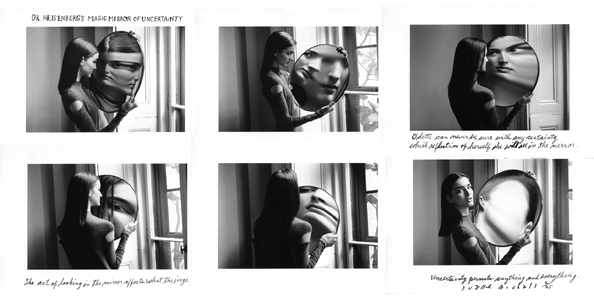
Figure 1. Duane Michaels, Dr Heisenberg's Magic Mirror of Uncertainty
REQUIRED RENTAL TEXTS (available at SIUE Textbook Service)
Giovanni Boccaccio. THE DECAMERON. Oxford World's Classics [new edition], 2008. ISBN: 978-0199540419.
Geoffrey Chaucer. THE CANTERBURY TALES. Penguin Classics, 2005. ISBN: 978-0140422344.
Jorge Luis Borges. COLLECTED FICTIONS. Penguin, 1999. ISBN: 978-0140286809.
Paul Auster. THE NEW YORK TRILOGY. Penguin Classics Deluxe Edition, 2006. ISBN: 978-0143039839.
Paul Auster. ORACLE NIGHT. Picador, 2009. ISBN: 978-0312428952.
Paul Auster. THE BOOK OF ILLUSIONS. Picador, 2009. ISBN: 978-0312429010.
FILMS
Being John Malkovich; Adaptation; Synecdoche
COURSE REQUIREMENTS
1 CRITICAL PAPER, 8-10 pages, MLA-style format and documentation (50%)*
A two-part project: an annotated bibliography (due after Spring Break) and a critical research paper. The bibliography is for the purposes of demonstrating what you have been reading & skimming outside of required class readings, and from which you are expected to have begun to formulate some leading questions for your critical paper. I will meet with each student individually to discuss the bibliography and possible directions for the paper. In the paper, you are expected to develop your own questions, subject matter, and approaches; introduction of secondary texts, critics, and ideas is required. This paper should deliver an original critical perspective and argument, and it should situate its argument in the context of the intellectual ideas encountered in course readings and class discussion, supplemented by additional secondary research. Your argument must be primarily grounded in an analysis of at least one literary text, which can be chosen from our syllabus (required and/or recommended texts) or from syllabi in your other courses (or even from your own readings in literature outside of this and other courses)--the key here is: I have to approve the text, or texts, chosen, and they should be as appropriate as possible in relation to the themes of this course. The primary literary text can also be supplemented by one or more films. This paper can in NO way be what is called an "explanatory" research paper or "literature review" in which you simply provide an overview or summary of an author's work and/or career, or a survey of criticism on a particular author's work. To help you get started, go HERE for a working bibliography of sources relevant to the subjects under discussion in this course. For help with writing about literature, go here and here. For help with MLA-style research documentation and citation, go here.
*M.A. students will produce a paper of approximately 15 pages, with a minimum of 8-10 secondary sources
SHORT READING RESPONSES (40%)
To facilitate class discussion, you will write short responses (roughly in the neighborhood of 2-3 typed, double-spaced pages) to weekly readings. These short reading responses don't begin until after we've acclimated ourselves (typically in the third or fourth week of the course--see Schedule of Events below), and they are not due in the last few weeks of the course, in order to give you more time to devote to your critical paper. It is expected that, in these responses, you will critically engage the texts under discussion in relation to the ideas raised in class discussions and in relation to any ideas and/or texts encountered in other courses that might be relevant. These short responses will aid you in developing close reading skills and critical writing techniques that are crucial to your success with the longer critical paper, and it is imperative that these short responses NEVER do the following: a) merely summarize the reading; b) detail what you "like" or "don't like" about the reading, with no seriously critical commentary; c) evaluate the author's skill as a writer according to your personal aesthetic criteria; or d) use the reading as a point of departure for a discussion of something that has nothing to do with the reading or discussions in class.
PARTICIPATION (10%)
As stated above under "Course Description," participation is vital to your success in this course. That means having a good attendance record, coming to class prepared to discuss the readings (with book or books in hand), and actively contributing to critically engaged conversations with your professor and peers. Each student will also be asked to lead one discussion related to a specific primary and/or secondary reading.
LATE ASSIGNMENT POLICY
I do not accept late assignments. Period. If there is an extraordinarily good reason for needing an extension on a due date, let me know in advance, and we will work it out.
ATTENDANCE POLICY
Attendance, promptness, and participation are essential to success in college courses. Faculty members recognize that unexpected occasions may arise when a student must be absent from class, but my general attendance policy is that if you are absent more than the number of required class sessions per week (in this case, that would be more than 2 sessions), I have the option of lowering your final course grade by one letter grade for each additional session missed. Furthermore, if absences become excessive (more than two weeks' worth of sessions), the SIUE Registrar, at my request, reserves the right to withdraw you administratively. For more information on this, please consult the following: SIUE Class Attendance Policy. Failure to attend class in a responsible and committed manner may thus be grounds for failure in or administrative withdrawal from the course.
ACADEMIC DISHONESTY
Any student found engaging in an act of academic dishonesty will be promptly dismissed from the course with a grade of "F." By "academic dishonesty," I mean PLAGIARISM (the act of representing the work of another as one's own), which the University considers a grave breach of intellectual integrity. All definitions, terminology, concepts, and patterns of organization taken from an outside source must be identified and given credit in any essay or exam you write--whether it be for the English department or any other department. For more detailed information on this, please consult the following: SIUE Plagiarism Policy.
DISABILITY ACCOMMODATIONS
If you feel that you are entitled to special accommodations (for example, a volunteer note-taker, interpreter, special desk, or extra time on tests), please contact the Disability Support Services office in Rendleman Hall #1218 (Phillip Pownall, Director), or visit their website, and they will help you fill out the necessary paperwork.
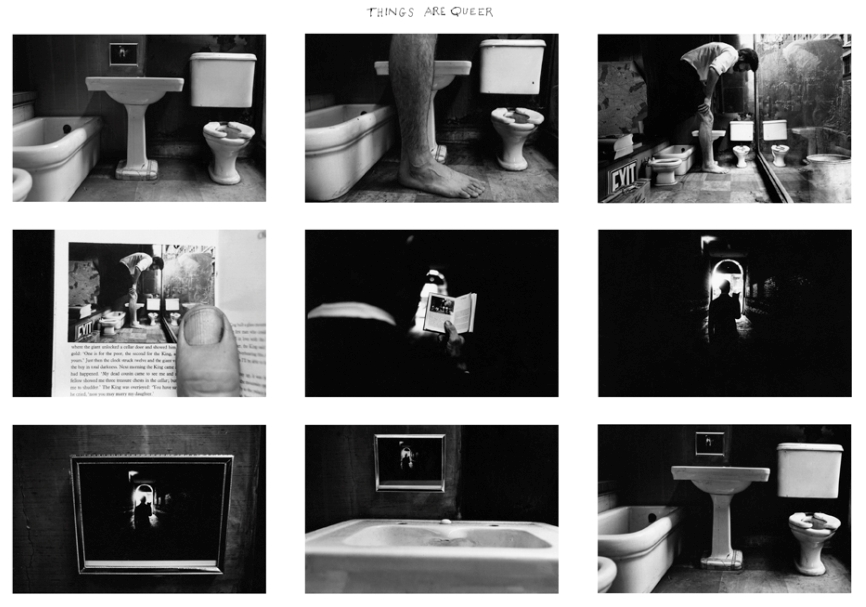
Figure 2. Duane Michaels, Things Are Queer
SCHEDULE OF EVENTS (subject to revision as semester progresses)
| Monday | Jan. 9 | Introduction to Course |
| Monday | Jan. 16 | No Class -- Martin Luther King, Jr. Holiday |
| View: Being John Malkovich (film) | ||
| Monday | Jan. 23 | Discuss: Being John Malkovich |
| Film Script Library: Charlie Kaufman | ||
| Read: | ||
| Borges, "The Garden of Forking Paths," "Pierre Menard, Author of the Quixote," and "The Library of Babel" | ||
| Hoftstadter, "Little Harmonic Labyrinth" and excerpt of "Recursive Structures and Processes" (from Godel, Escher, Bach, pp. 103-129) | ||
| Monday | Jan. 30 | Paradise Lost, Books I & II |
| Dante's Inferno Test | ||
| Dante's Inferno: A Virtual Tour of Hell | ||
| Dante's Inferno (Wikipedia) | ||
| darkness visible: a resource for studying Milton's Paradise Lost (Christ's College, Cambridge) | ||
| Tuesday | Sep. 8 | "I think there are a lot more Chads than we might imagine. Just because it's life. They don't even go to the expense of being charming. They're just in a position of being able to do it, and ultimately they're like, 'Well, fuck you. I'm gonna do this, and I don't really care'." (Neil LaBute, discussing In The Company of Men) |
| View: In the Company of Men (film) | ||
| Thursday | Sep. 10 | View: In the Company of Men (film) |
| Tuesday | Sep. 15 | Discuss: In the Company of Men (film) |
| response paper due | ||
| Thursday | Sep. 17 | NO CLASS--PROFESSOR AT SYMPOSIUM |
| Tuesday | Sep. 22 | "Can it be sin to know? Can it be death? And do they only stand by ignorance? Is that their happy state, the proof of their obedience and their faith?" (Satan, Book IV, Paradise Lost) |
| Paradise Lost, Book IV | ||
| "Felix Culpa" (Fortunate Fall) | ||
| Thursday | Sep. 24 | Paradise Lost, Book IV |
| Notes on Paradise Lost (Books IV, IX, and XII) | ||
| response paper due | ||
| Tuesday | Sep. 29 | "Once a label is on something, it becomes an it, like it's no longer alive. / It's like a loss of vision, or some dark compression, or a black spot on your eye." (Morcheeba, w. Kurt Wagner, "What New York Couples Fight About") |
| Paradise Lost, Book IX | ||
| Milton, "Doctrine and Discipline of Divorce" | ||
| Howard, "Milton's 'Divorcive' Liberties" | ||
| Thursday | Oct. 1 | Paradise Lost, Books IX & X |
| Jokinen, "sentence et solas: Joy and Sensuality in Paradise Lost Before and After the Fall" | ||
| response paper due | ||
| Tuesday | Oct. 6 | Paradise Lost, Book XII |
| Thursday | Oct. 8 | Concluding Discussion: Paradise Lost |
| response paper due | ||
| Tuesday | Oct. 13 | LaBute, Bash: Three Plays |
| YouTube Clip: Calista Flockhart in Bash | ||
| Thursday | Oct. 15 | NO CLASS: PROFESSOR AT CONFERENCE |
| Tuesday | Oct. 20 | LaBute, Bash: Three Plays |
| Interview with Neil LaBute | ||
| Without Mercy? Neil LaBute as Mormon Artist (follow link to "Electronic Articles," then to Volume 36, Number 2, Summer 2003, then scroll down in table of contents for that issue, and follow the link for the article cited above, and you can access either a .pdf or html version of the essay) | ||
| response paper due | ||
| Thursday | Oct. 22 | View: Your Friends and Neighbors (film) |
| Tuesday | Oct. 27 | Barry: But don't you think we're gonna have to . . . I mean, like pay for all this in the end? Cary: Possibly. I mean, if there ends up being a God or something like that whole eternity thing out there, like, then, yeah, probably so. I dunno. We'll see. But until then, we're on my time, okay? The interim is mine. (from LaBute, Your Friends and Neighbors) |
| View: Your Friends and Neighbors (film) | ||
| Thursday | Oct. 29 | Discuss: Your Friends and Neighbors (play & film) |
| response paper due | ||
| Tuesday | Nov. 3 | "Most of the time we plod along through life so wretchedly removed from our real feelings that we miss everything going on around us." (Neil LaBute, in an interview in BOMB magazine) |
| LaBute, Some Girl(s) | ||
| YouTube Clips: Some Girl(s), 1 & 2 | ||
| Thursday | Nov. 5 | LaBute, Some Girl(s) |
| response paper due | ||
| Tuesday | Nov. 10 | View: The Shape of Things (film) |
| Thursday | Nov. 12 | View: The Shape of Things (film) |
| Tuesday | Nov. 17 | Discuss: The Shape of Things (play & film) |
| Thursday | Nov. 19 | Special Class: Video Chat with Neil LaBute [Meet in Founders Hall, Room 2300] |
| Monday-Friday | Nov. 23-27 | NO CLASS: THANKSGIVING BREAK |
| Tuesday | Dec. 1 | LaBute, The Shape of Things & Fat Pig |
| Thursday | Dec. 3 | LaBute, Fat Pig |
| Tuesday | Dec. 8 | LaBute, Reasons to Be Pretty |
| Thursday | Dec. 10 | LaBute, Reasons to Be Pretty |
| Wednesday | Dec. 16 | CRITICAL PAPERS DUE: papers must be emailed to me at eileenajoy@gmail.com, and they should be formatted in Microsoft Word and saved with either a .doc or .docx file extension (by midnight). |
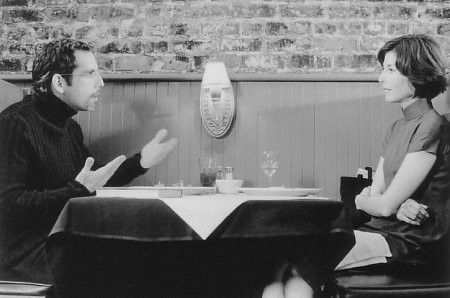
Figure 3. still image from Neil Labute's film Your Friends and Neighbors (1998)