Professor Eileen Joy
ENG208.001
Survey of British Literature: Beginnings to 1789
Be(coming) Virtuous/Be(coming) Human
FALL 2007
Mondays 1:30-2:45 pm (Peck Hall #3315)
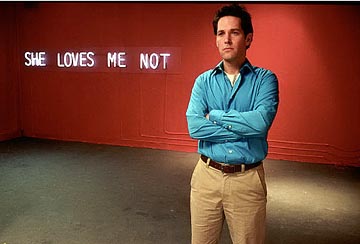
Figure 1. still image from film The Shape of Things (2003)
"What a piece of work is a man, how noble in reason, how infinite in faculties, in form and moving, how express and admirable in action, how like an Angel in apprehension, how like a God: the beauty of the world; the paragon of Animals; and yet to me, what is this Quintessence of dust?"--Hamlet (from Shakespeare's Hamlet)
"When I thought of my Family, my Friends, my Countrymen, or human Race in general, I considered them as they really were, Yahoos in Shape and Disposition . . . . When I happened to behold the Reflection of my own Form in a Lake or Fountain, I turned away my Face in Horror and detestation of my self."--Jonathan Swift (from Gulliver's Travels)
COURSE DESCRIPTION
In this course, we will study some of the major works of British literature from the Middle Ages through the eighteenth century. The major readings of the course have been chosen for their emphasis on the themes of violence and evil, virtue and morality, and the nature of what it means to be "human." In addition to the literary works that we will be reading, we will also be viewing films that have been chosen because they either directly or indirectly "adapt" the works we will be reading or because they address, in a cross-historical and cross-cultural way, the themes and questions of the works we will be reading. As opposed to an approach where we would try to absorb as much as possible of the literature spanning an 800-year period, by reading a little bit of "everything," we are going to concentrate, in great depth, on what I consider to be six of the most important works written in the English language prior to the end of the eighteenth century--Gawain and the Green Knight, Titus Andronicus, Macbeth, King Lear, Paradise Lost, and Gulliver's Travels. Better to know six works of literature really well than to know next to nothing about twenty or thirty. Well, that's what I think, anyway.
We will take the time to read these works with care and thoughtfulness; we will engage their ideas energetically and with conviction in discussion with others; we will seek to understand them on the multiple levels of reality and unreality they body forth. To that end, we will practice the skills of close reading and the equally important skills of intellectual dialogue and debate, and we will also develop our skills at writing critically about literature. Finally, we will seek together to make connections between the older worlds of these works of literature and the world we live in today, and we will also interrogate together the question of whether or not "literature matters."
You will learn (hopefully) that one does not think well in a vacuum--our ideas benefit immeasurably when exchanged with others in a series of critical dialogues. Preparing for and participating in class are vitally important to your success in this class, and therefore, your contribution to in-class discussions as well as your attendance record will be factored into your final grade. While some class time will be devoted to lecturing, an equal amount of time will be devoted to discussing various aspects of the readings and films and the ideas they raise, and I want to see students vigorously engaging with the readings. Allow me to also note here that if I sense that students are not keeping up with the reading or are coming to class unprepared to discuss the readings, I will institute weekly reading quizzes. Please don't make me resort to this.
REQUIRED TEXT
Textbook Rental Services>
Abrams et al, eds. Norton Anthology of English Literature. Vol. 1. 8th ed. Norton, 2006. [If you have the 7th edition, published in 2005, that's perfectly all right.]
COURSE REQUIREMENTS
1 CRITICAL ESSAY (40%)
There will be one short paper (5-6 pages) in which you will demonstrate your skills at the close analytical reading of literary texts. In this essay, you will practice your hand at literary interpretation, where you produce your own ideas about how a text creates meaning. Through close reading, you will look closely at the language of the text in order to demonstrate not just what you think a text means, but more importantly how it means what you think it does.
DISCUSSION QUESTIONS (50%)
Approximately every other week, I will post discussion questions on the website syllabus that are related to the readings and films under discussion (you will find these on the Schedule of Events--see below), and it will be your responsibility to type responses to these questions and turn these in during the appropriate class period. These questions will be mainly interpretive in nature and will be graded on the requisite effort (or lack thereof) put forth, and not on whether or not the answers are "right" or "wrong." Speaking of which, in this class, there are never any right or wrong answers, only more or less interesting ones.
GROUP VIDEO PROJECT (10%)
The class will be divided into small groups of approximately six to eight students each, and each group will be responsible for presenting a short dramatic video "adaptation" of one, or any portion, or any combination of portions of the literary works we will have read (and viewed) this semester. These will be presented during the final exam period.LATE PAPER POLICY
I do not accept late papers. Period. If there is an extraordinarily good reason for needing an extension on a paper due date, let me know in advance, and we will work something out.
ATTENDANCE POLICY
Attendance, promptness, and participation are essential to success in college courses. Faculty members recognize that unexpected occasions may arise when a student must be absent from class, but my general attendance policy is that if you are absent more than the number of required class sessions per week (in this case, that would be more than 1 session), I have the option of lowering your final course grade by one letter grade for each additional session missed. Furthermore, if absences become excessive (more than two weeks' worth of sessions), the SIUE Registrar, at my request, reserves the right to withdraw the student administratively. For more information on this, please consult the following: SIUE Class Attendance Policy. Failure to attend class in a responsible and committed manner may thus be grounds for failure in or administrative withdrawal from the course.
ACADEMIC DISHONESTY
Any student found engaging in an act of academic dishonesty will be promptly dismissed from the course with a grade of "F." By "academic dishonesty," I mean PLAGIARISM (the act of representing the work of another as one's own), which the University considers a grave breach of intellectual integrity. All definitions, terminology, concepts, and patterns of organization taken from an outside source must be identified and given credit in any essay or exam you write--whether it be for the English department or any other department. For more detailed information on this, please consult the following: SIUE Plagiarism Policy.
DISABILITY ACCOMMODATIONS
If you feel that you are entitled to special accommodations (for example, a volunteer note-taker, interpreter, special desk, or extra time on tests), please contact the Disability Support Services office in Rendleman Hall #1218 (Jane A. Floyd-Hendey, Director), and they will help you fill out the necessary paperwork.
GRADING SCALE
| A | 93-100 |
| B | 84-92 |
| C | 74-83 |
| D | 65-73 |
| F | under 65 |
SCHEDULE OF EVENTS
[all readings, except for Titus Andronicus, are in the Norton Anthology; "pro bono" means "for the good of it"]
| Monday | Aug. 20 | Introduction to Course |
| Wednesday | Aug. 22 | View: Ripley's Game (film) |
| Monday | Aug. 27 | View: Ripley's Game (film) |
| Wednesday | Aug. 29 | Discuss: Ripley's Game |
| Monday | Sep. 3 | NO CLASS -- LABOR DAY HOLIDAY |
| Wednesday | Sep. 5 | Read: Sir Gawain and the Green Knight |
| Notes on Sir Gawain and the Green Knight | ||
| More Notes on Sir Gawain and the Green Knight | ||
| The Knightly Ethic | ||
| Backgrounds to Romance: "Courtly Love" | ||
| Robert Marmorstein's Rules of Chivalry | ||
| pro bono reading | Johnston, "On Sir Gawain and the Green Knight" | |
| Monday | Sep. 10 | Discuss: Sir Gawain and the Green Knight |
| View: excerpt from Apocalypse Now (film) | ||
| Wednesday | Sep. 12 | Discuss: Sir Gawain and the Green Knight & Apocalypse Now |
| Aristotle: Ethics and the Virtues | ||
| DUE: Discussion Questions #1 | ||
| Monday | Sep. 17 | Read & View: Titus Andronicus |
| Online Text of Titus Andronicus | ||
| Synopsis of Titus Andronicus | ||
| Basic Definitions: Comedy & Tragedy | ||
| Aristotle's Poetics | ||
| Humorous Modern Abridgement of Titus | ||
| Wednesday | Sep. 19 | Read & View : Titus Andronicus |
| Monday | Sep. 24 | Discuss: Titus Andronicus |
| Wednesday | Sep. 26 | Discuss: Titus Andronicus |
| Monday | Oct. 1 | Discuss: Titus Andronicus & Tragedy/Catharsis |
| Dramatic Structure: Comedy & Tragedy | ||
| Not Again: 24 Great Films Too Painful to Watch Twice | ||
| Wednesday | Oct. 3 | Read & Discuss: King Lear |
| King Lear Synopsis | ||
| Notes on King Lear | ||
| pro bono reading | Johnston, "Speak What We Feel: An Introduction to King Lear" | |
| DUE: Discussion Questions #2 | ||
| Monday | Oct. 8 | Read & Discuss: King Lear |
| Wednesday | Oct. 10 | Discuss: King Lear |
| Monday | Oct. 15 | Discuss: King Lear |
| Wednesday | Oct. 17 | View: Scotland, PA (film) |
| Macbeth: Synopsis | ||
| DUE: Discussion Questions #3 | ||
| Monday | Oct. 22 | View: Scotland, PA (film) |
| Wednesday | Oct. 24 | Discuss: Scotland, PA |
| Monday | Oct. 29 | NO CLASS -- PROFESSOR AT CONFERENCE |
| Wednesday | Oct. 31 | NO CLASS -- PROFESSOR AT CONFERENCE |
| Monday | Nov. 5 | Read & Discuss: Paradise Lost (Books IV & IX) |
| The Cast of Paradise Lost | ||
| Outline of Paradise Lost | ||
| Notes on Paradise Lost (Books IV, IX, & XII) | ||
| Wednesday | Nov. 7 | Discuss: Paradise Lost (Books IV & IX) |
| What is Felix Culpa (the "Fortunate Fall")? | ||
| Monday | Nov. 12 | View: The Shape of Things (film) |
| Wednesday | Nov. 14 | View: The Shape of Things (film) |
| DUE: Discussion Questions #4 | ||
| Nov. 19 - Nov. 23 | NO CLASSES -- THANKSGIVING HOLIDAY | |
| Monday | Nov. 26 | Discuss: The Shape of Things (film) |
| Wednesday | Nov. 28 | Read & Discuss: Gulliver's Travels (Part IV) |
| Study Guide for Book IV of Gulliver's Travels | ||
| What is Satire? | ||
| The Landlord (FunnyorDie.com) vs. The Strife Aquatic & Hearts and Minds Update (The Daily Show) vs. Dr. Strangelove | ||
| Immanuel Kant's "What is Enlightenment?": A Brief Introduction | ||
| pro bono reading | Johnston, "On Swift's Gulliver's Travels" | |
| Monday | Dec. 3 | Discuss: Gulliver's Travels (Part IV) |
| DUE: Critical Essay | ||
| Wednesday | Dec. 5 | Discuss: Gulliver's Travels (Part IV) |
| Tuesday (Final Exam) | Dec. 11 (12:00-1:40) | Group Video Presentations |